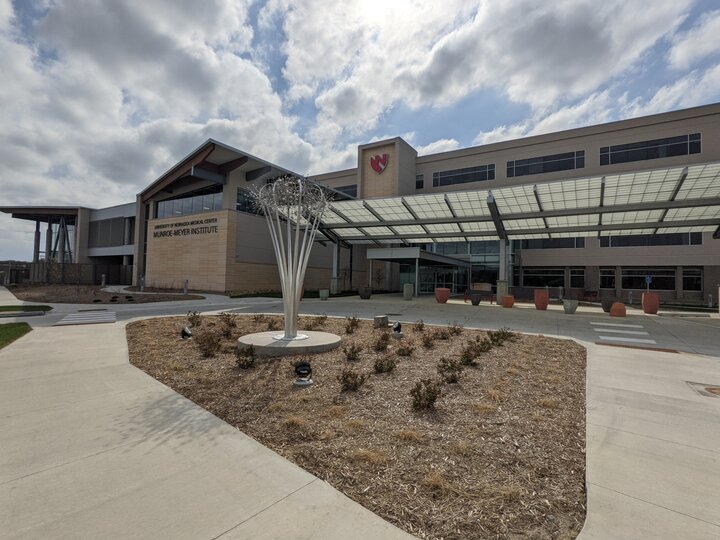
Munroe-Meyer Institute at the University of Nebraska Medical Center
Behavioral Pediatrics and Integrated Care Program- Omaha Metro (12 positions) (Match Code 141617)
Behavioral Pediatrics and Integrated Care Program – Rural Nebraska (4 positions)
· Rural Integrated Care Central (1 position) (Match Code 141616)
· Rural Integrated Care West (1 position) (Match Code 141620)
· Rural Integrated Care South (1 position) (Match Code 141619)
School-Based Psychological Services (5 positions) (Match Code 141621)
School-Based ABA Services (1 position) (Match Code 141618)
Intensive Applied Behavior Analysis Assessment and Treatment Program – (3 positions) (Match Code 141615)
Autism Diagnostic and Outpatient Services Program (1 position) (Match Code 141622)
Lifespan Developmental Disabilities Behavioral Health Program (2 position) (Match Code 141628)
START DATE: 8/01/2027
The Munroe-Meyer Institute (MMI) is an academic unit located within the University of Nebraska Medical Center in Omaha, NE. The University of Nebraska Medical Center is a leader in academic health sciences and our enterprise is vital to Nebraska, the nation's heartland communities, and beyond. Professional staff members at MMI are organized within disciplines that include Psychology, Special Education, Clinical Genetics, Developmental Medicine, Occupational Therapy, Physical Therapy, Speech Pathology, Social Work, Recreation Therapy, Nutrition, Nursing, Genetics Laboratories, Severe Behavior, Pediatric Feeding Disorders, and the Integrated Center for Autism Spectrum Disorders.
MMI Psychology Interns function primarily in a clinical role that involves assessment, diagnosis, treatment and consultation services for individuals with a wide range of mental and behavioral health needs and across abilities, backgrounds, languages, and the lifespan. Interns participate in a variety of nonclinical activities to prepare them for independent practice, including professional development, didactics, peer and group supervision, applied research, and clinical supervision of graduate and/or undergraduate students.
This internship experience has an emphasis on preparing psychologists to work with pediatric and transition-age populations, through the following core activities:
- Hands-on, experiential, interdisciplinary clinical training
- Intentional didactic and professional development training
- Faculty, peer, and group supervision
- Applied research and program evaluation
Interns training with MMI provide clinical services in MMI clinics on campus, community-based health care facilities (including primary care clinics), schools, and community agencies throughout Nebraska. MMI also provides state-wide technical assistance, continuing education, and consultation to public schools, behavioral health agencies, and other programs providing services to children, youth, and adults. Referrals to MMI are made by pediatricians, schools, and caregivers seeking treatment, second opinions, or interdisciplinary assessments for children and adolescents.
Take a virtual campus tour to experience UNMC.
MMI Programs and Rotations
Applicants interview with, rank, and are matched with these programs separately. Interns will complete all of their rotations within a single program.
We offer interns opportunities to receive the required experiences and supervision necessary for a Psychology License and Board Certification in Behavior Analysis (BCBA). Note the programs listed below with * identify those programs with supervisors with a BCBA to provide needed supervision to become certified. Interns working on these dual credentials will have intentional opportunities for experiences that address both psychology and ABA competencies and the opportunity to work with other trainees aspiring to both credentials.
Behavioral Pediatrics and Integrated Care Program – Omaha Metro*
Behavioral Pediatrics and Integrated Care Program – Rural Nebraska
- Rural Integrate Care – Central
- Rural Integrated Care – West
- Rural Integrated Care - South
School-Based Psychological Services*
School-Based ABA Services*
Intensive Applied Behavior Analysis Assessment and Treatment Program
Autism Diagnostic and Outpatient Services Program*
Lifespan Developmental Disabilities Behavioral Health Program*
Behavioral Pediatrics and Integrated Care Program – Omaha Metro
In this program, interns will gain experience in behavioral pediatrics at MMI and/or integrated care in a primary care clinic in the Omaha metro area. Trainees in this program will learn outpatient behavioral assessment and treatment techniques for common developmental and behavioral problems encountered by children, adolescents, and their families. Typical presenting problems include noncompliance, tantrums, ADHD assessment and treatment, disruptive school behavior, adjustment disorders, anxiety, depression, habit disorders, and Autism assessment and intervention. In the primary care clinics, interns learn to work alongside physicians and staff in the community in both urban and suburban sites throughout Omaha. Through these experiences, interns can expect to learn how best to integrate into the culture of primary care while providing evidence-based treatment.
Trainees work closely with their faculty supervisor(s) and receive live observation and supervision weekly. Interns in these rotations also have monthly team meetings to discuss pragmatic issues related to practice in primary care. While presenting concerns may vary across clinical practice locations in terms of variety/breadth and severity/intensity, the types of issues and orientation of treatment interventions will be similar.
Interns in the BPIC program complete two 6-month major rotations which allows them to choose whether they would like experience in behavioral pediatrics, integrated care, or both. Some rotations provide "specialized" behavioral health training opportunities (depending upon the faculty supervisor) in areas such as sleep disorders, pain and stress related disorders, autism and developmental assessment, and lifespan/adult intellectual and developmental disabilities. In addition to major rotations, interns also have the opportunity to complete additional experiences in minor rotations that may include additional clinical and academic experiences such as lifespan/adult intellectual and developmental disabilities, school-based assessment and consultation, school-based ABA, neuropsychological assessment, group therapy (clinic or school-based), integrated primary care, and psychological assessment at Douglas County Youth Center. Additional mini-rotation experiences may also include grant writing, teaching, or work on grant-funded technical assistance projects
Behavioral Pediatrics and Integrated Care Program – Rural
This program is not a rotation, but a rural living and learning experience. Applicants will interview for, rank, and be matched separately with tracks/placements located in the Central and West areas of the state.
Housing benefits (financial support) will be available for interns matched with this track.
The Rural Integrated Care Program provides interns with the opportunity to learn outpatient behavioral health assessment and treatment techniques in primary care settings, working alongside physicians and other health professionals in communities outside of the Omaha metro area. These communities are all located in rural areas that are considered mental health shortage areas. Interns will learn outpatient behavioral assessment and treatment techniques for common developmental and behavioral problems encountered by children, adolescents, and their families. These include problems such as noncompliance, tantrums, ADHD, disruptive school behavior, adjustment disorders, anxiety, depression, habit disorders, elimination disorders and Autism. Outpatient services for children with developmental disabilities are also provided. Other opportunities may involve performing school consultation and/or interventions. Interns participate in monthly didactics and supervision (peer and group) via telehealth connections. Monthly team meetings with all interns working in integrated care are scheduled to discuss pragmatic issues endemic to integration of behavioral health services and research into primary care. These experiences allow the intern to learn how best to integrate into the culture of primary care while providing evidence-based behavioral health services. Funding will be provided for interns when travel is required for large group seminars of all interns in the Nebraska Internship Consortium. Additional housing benefits are available. These are all currently 12-month rotations/positions and each site has 1 position available.
Rural Integrated Care - North (NOT ACCEPTING TRACKS 2026-2027 MATCH)
Interns learn outpatient behavioral health assessment and treatment in a federal qualified health center (FQHC) primary care setting. Based in Norfolk, Nebraska, this clinic serves a rural, underserved patient population (https://midtownhealthne.org/). Norfolk Nebraska is a thriving community of 25000 less than 2 hours from Lincoln and Omaha (https://visitnorfolkne.com/home/things-to-do/). Interns will also gain experience in outpatient behavioral assessment, particularly for autism and ADHD, with substantial opportunities to administer various standardized assessments, including the ADOS-2. Other opportunities may involve performing school consultation and/or interventions and participation in multidisciplinary genetics and children with special health care needs clinics.
Rural Integrated Care - Central
The Central track is based in the heart of Nebraska in Kearney. Interns in this program learn evidence-based health care in a large primary care clinic that has been a training site for over 20 years. In addition to becoming proficient with providing outpatient services for children and their families, interns gain expertise in Autism evaluation. Interns also have opportunities for on-going interdisciplinary training through the Medically Handicapped Children’s Program (MHCP) Genetics ClinicLocated less than 3 hours from Omaha, Kearney (population 34,000) is home to the University of Nebraska-Kearney and an expanding campus that provides training and services for University of Nebraska Medical Center. https://www.unk.edu/academics/health_sciences/unmc-programs-at-unk.php.
In this unique track, trainees will work and live in the Rushville/Chadron area in the western part of the state and serve clinics across sites in the area. Outpatient services for children with developmental disabilities and interdisciplinary clinics (e.g., Medically Handicapped Children's Program Clinics) are also provided. Our interns have the opportunity to practice school-based mental health within the local school systems and may do additional school consultation and/or interventions. As integral parts of our rural communities, clinicians and students have frequent opportunities for community outreach and interns can engage in areas of particular interest (e.g. law enforcement training, parent training, suicide prevention, bullying prevention, and more). Interns also assist with running an annual camp for high school students exploring behavioral health careers.
Rural Integrated Care - South
Hastings is located in central Nebraska with a population of approximately 25,000. Interns at this location will experience a variety of clinical experiences including integrated care in a Family Practice Clinic as well as providing services in a private practice. They will also get the opportunity to serve a variety of age ranges and presenting concerns. In addition to training on clinical skills, interns will also be provided an opportunity to learn about/complete evaluations for presenting concerns such as Autism, ADHD, Anxiety, and Depression. This internship experience has two supervising psychologists to provide supervision/mentorship. Hastings is a charming town and is home to Hastings College. It is 30 minutes from a larger town, Grand Island and less than two hours from Nebraska's capital, Lincoln, NE.
School-Based Psychological Services Program
This program prepares future psychologists to expand access to high-quality, school-based mental and behavioral health services. Through partnerships with schools and communities across urban, suburban, and rural Nebraska, trainees support students within a multi-tiered system of supports (MTSS), providing services that span prevention, early intervention, and intensive treatment. Experiences include consultation, assessment, direct mental health services, systems-level training, and capacity-building initiatives designed to strengthen student well-being and promote sustainable school mental health practices. Supervisors utilize a developmental model of supervision. Interns will participate in monthly huddles that gather all trainees and faculty in this program to discuss topics in the delivery of psychological services in school settings.
Two 12-month training experiences are offered within this program: Assessment and Behavioral Consultation and Comprehensive Clinical Services. Matched trainees will rank their preference for each experience and faculty will design an internship experience accordingly. We have 4 internship positions. Typically, 1 intern position is dedicated to Assessment and Behavior Consultation, and 3 intern positions are dedicated to Comprehensive Clinical Services.
Assessment and Behavior Consultation: This training opportunity involves providing psychoeducational assessment of students to determine verification within special education (e.g., learning disabilities, other health impairments, intellectual disability, autism, developmental delays, and/or emotional disturbance); collaborating with students, parents, teachers, administrators, and other professionals, facilitating multidisciplinary team meetings; and providing behavioral consultation (student-centered or classroom-centered). Fellows, interns, and practicum students meet twice a month for a team meeting to discuss cases and problem-solve concerns.
- Comprehensive Clinical Services: This training opportunity consists of intensive training in mental health promotion and intervention to youth in general and special education settings. Trainees will provide individual and family therapy in school-based mental health clinics. Evidence-based practices such as Acceptance and Commitment Therapy, Cognitive Behavioral Therapy, and Parent Management Training are commonly utilized. Trainees will have opportunities to evaluate youth for developmental, mental, and behavioral health concerns that result in a medical diagnosis. Common presenting concerns are anxiety, depression, Autism, ADHD, and behavioral disorders. Emphasis is placed on consulting with educators on how to support the mental and behavioral health of students served. Additionally, we provide high-quality training, coaching and support for partnering schools.
Opportunities to supervise masters- and specialist-level practicum students are typically available depending on intern’s experience and goals. Additionally, trainees will choose a minor rotation to complement their primary clinical training experience. Some examples include grant writing, teaching, work on grant-funded technical assistance projects, outpatient assessment and treatment services, group therapy, and psychological assessment at Douglas County Youth Center.
School-Based ABA Services Program
In this program, interns experience the integration of school psychological and behavioral analytic consultation while providing Tier 3 behavior assessment and consultation services for students who engage in significant, externalizing behaviors (e.g., elopement, self-injury, destruction) and who have intellectual and developmental disabilities. Consultation occurs in both general education and special education environments. Individual, class-wide, and systems consultation activities are available to influence change within contracted school districts. Specific activities include (1) conducting functional behavior assessment; (2) working with the school team to develop and implement behavior intervention plans; (3) using behavioral skills training to teach educators intervention strategies; (4) developing and delivering training to improve educator knowledge; and (5) technical assistance with district leadership for improving programming and behavior support for students. Supervision in applied behavior analysis is available for interns pursuing dual credentialing as a Psychologist and Behavior Analyst.
Interns will join an MMI consultation team including a post-doc fellow and graduate students in special education, school psychology, and ABA allowing opportunities for interns to provide supervision (depending on the intern’s experience). The team works together throughout the consultation process conducting joint observations and assisting each other in evaluating intervention strategies. Weekly team meetings are held to update the team on developments, analyze student progress, and problem-solve issues.
Trainees also engage in monthly huddles to discuss practice issues in school settings and how to create systems of change. Some huddles are combined with other programs whose trainees are also pursuing dual licensure in psychology and behavior analysis to discuss professional issues within the fields and learn from each other through case discussions.
Interns will choose a minor rotation such as teaching or additional clinical experiences such as lifespan/adult intellectual and developmental disabilities, school-based assessment and consultation, group therapy (clinic or school-based), and psychological assessment at Douglas County Youth Center.
Intensive Applied Behavior Analysis Assessment and Treatment Program
Rotations are available in which intern trainees develop expertise in the assessment and treatment for individuals with autism spectrum disorder (ASD) and related disorders, and their families. Two unique experiences are offered through the Intensive ABA (IABA) Assessment and Treatment Program: Pediatric Feeding and BRIDGE. We will accept 3 interns in this program. We anticipate accepting 2 interns who will split 6-month rotations across Pediatric Feeding and BRIDGE clinics and 1 intern who will have a 12-month position in BRIDGE with a minor rotation in Autism Diagnostic Clinic.
- Pediatric Feeding Rotation: Interns will participate in the development and implementation of assessment and treatment procedures, generalization of treatment and caregiver training for individuals with severe feeding difficulties (e.g., food selectivity, food refusal).
BRIDGE (Early Intensive Intervention) Rotation: Interns will work alongside psychologists, as well as doctoral- and masters-level BCBAs, to provide innovative group-based ABA services to children with autism. This year, we anticipate accepting two interns who will split 6-month rotations across Pediatric Feeding and BRIDGE clinics.
Autism Diagnostic and Outpatient Services Program
This new yearlong program, formerly part of the Intensive Applied Behavior Analysis Assessment and Treatment Program, housed within our Autism Diagnostic Clinic (ADC), provides interns with the opportunity to work as part of an interdisciplinary team to evaluate children and adolescents suspected of having an autism spectrum disorder diagnosis. Interns play an integral role in conducting diagnostic intakes and learn to conceptualize cases and triage patients to appropriate service lines. Interns also will conduct comprehensive psychological assessments (including training and experience administering the ADOS-2), generate diagnoses, and support families in accessing appropriate services and supports.
Outpatient services typically include a combination of manualized individual and group-based therapies, such as Unstuck and On Target, Modified Parent-Child Interaction Therapy, and problem-focused therapies (e.g., toilet training). Clinicians may also support families in coping with and understanding their child's diagnosis, coordinate care with other providers, or assist families in pursuing intensive treatment services as part of the parent training process.
Within ADC, opportunities to participate in on-going departmental research may be available. Some of our current or recent projects include: 1) FDA-Regulated Clinical Trial for Evaluating the Use of Eye-Tracking Devices in the Diagnosis of Children with ASD, 2) FDA-Regulated Clinical Trial for the Monitoring of Treatment Effects, and 3) Evaluating a Virtual Reality-based Hair Cutting Simulator. This year, we anticipate accepting two interns.
Lifespan Developmental Disabilities Behavioral Health Program:
Within this track, interns will have the opportunity to provide outpatient behavioral health services at the Munroe Meyer Institute, participate in interdisciplinary clinics with developmental medicine, and provide consultation and support for community agencies and/or schools providing services to individuals with intellectual and developmental disabilities.
Interns will complete two, 6-month rotations in the Lifespan I/DD Behavioral Health Clinic. One rotation will provide interns with experience working with patients from early childhood through late adulthood, and in a second rotation, interns will gain experience working with patients aged fourteen through late adulthood. This provides interns with the unique experience of working with underserved patients with I/DD across the lifespan. Responsibilities will include providing outpatient treatment and psychological evaluations for patients with I/DD. Outpatient treatment includes developing function-derived intervention plans within individual and family therapy to address a variety of behavioral health concerns in children, adolescents, and adults. Additionally, opportunities for consultation with medical staff, schools, job sites, group homes, and community agencies will be available.
Psychological evaluation techniques may include cognitive measures, structured interviews and observations, social/emotional evaluations, as well as opportunities to complete comprehensive evaluations for developmental concerns (e.g., ADHD, IDD, ASD). In addition to major rotations, interns can complete minor rotations that may be 6-month or 12-month experiences. Minor rotations may include working with school-based transition programs and/or staff-training contracts with community service providers, grant writing, teaching, work on grant-funded technical assistance projects or additional clinical and academic experiences such as school-based assessment and consultation, school-based ABA, neuropsychological assessment, group therapy (clinic or school-based), and psychological assessment at Douglas County Youth Center.
BCBA supervision is also provided if the intern is accruing hours towards their BCBA. Trainees will participate in monthly huddles to discuss clinical and professional issues in providing services across the Lifespan. Additionally, some huddles will include trainees from other programs who are pursuing dual credentialling in psychology and behavior analysis to discuss professional issues in the field and share case presentations to expand learning.
Additional Clinical Training Opportunities
LEND Mini-Rotation
Interested applicants can complete a mini-rotation in the Leadership Education in Neurodevelopmental and related Disorders (LEND) program. This provides a year-long intensive training experience aiming to “develop a qualified, family-centered and competent workforce for individuals with neurodevelopmental and related disabilities by providing a comprehensive training program, including leadership training, clinical services, technical assistance, continuing education and resource development.” For more information on LEND, please click here.
Professional Development Training
All interns (regardless of program) attend monthly didactics and professional development activities. Previous Didactic topics have included:
- Academic concerns
- Anxiety, Tics, and OCD
- ADHD
- Autism assessment and diagnosis
- Behavior case conceptualization
- Behavioral Parent Training
- Depression
- Parent training
- Sleep disorders
- Trama-Informed Care
- Working with schools
Other professional development activities include:
- Monthly interdisciplinary leadership seminars
- Case conferences and rounds
- MMI monthly Grand Rounds
- Research presentations and meetings
Research Training Opportunities
A predoctoral internship experience with MMI will include research participation. Multiple opportunities will be available to you through ongoing departmental research related to improving service provision in integrated primary care and schools; concerns in pediatric and lifespan psychology; and behavioral pediatrics. Relevant independent research and studies using MMI psychology existing datasets are encouraged. Presentation and publication opportunities are available throughout the year. See below for publications within the last 5 years. Faculty members are in bolded.
Forcino, S. S., Grimes, L. M., & Kuhn, B. R. (2024). Managing sibling referrals: Ethical considerations for integrated pediatric primary care. Clinical Practice in Pediatric Psychology, 12(2), 242–252. https://doi.org/10.1037/cpp0000504 [psycnet.apa.org]
Hwang, S., Suk, J., Meffert, H., Lerdahl, A., Garvey, W., Edwards, R., DeLizza, A., Soltis-Vaughan, B., Cordts, K., Leibenluft, E., & Blair, RJR. (2024). Neural responses to intranasal oxytocin in youths with severe irritability. American Journal of Psychiatry, 181(4), 291-298. DOI: 10.1176/appi.ajp.20230174.
Barboza, A.A., Lill, J.D., Bassingthwaite, B.J., Aberle, L. B., Wielgos, Z.R., & Keith, A.C. (2023). Using Video Modeling to Increase Face-Covering Behavior for Individuals with Down Syndrome in the School Setting. Trends in Psychology. DOI: 10.1007/s43076-023-00265-z.
Hayes, L. B., Young, K. M. & Morton, A. R. (2023, February). Responding to mental health: Supporting individuals and families in crisis. Presentation presented at the Behavioral Health Threat Assessment Advanced Training for Law Enforcement with the Lincoln Police Department in Lincoln, NE (50 participants: state and local law enforcement, first responders, detention staff, mental health workers).
Foje, N., Raposo-Hadley, A., Farrens, A., Burt, J. S., Evans, C., Bauman, Z. M., … & Garman, J. D. (2022). Baseline Needs Assessment For a Hospital-based Violence Intervention Program 1-year Pilot. Trauma Care, 2(2), 373-380. https://doi.org/10.3390/traumacare2020030
Adams, E., Watanabe-Galloway, S., Baerentzen, M., Grennan, A., Schneider, E., & Doyle, M. (2022). The Behavioral Health Education Center of Nebraska: A creative solution to a persistent behavioral health workforce shortage. Psychiatric Clinics of North America, 45, 259-270.
Clarke, M.A; Neitzke, L., & Cooper, K.M. (2022). Shared Living Providers (SLP) Experience Documentation Burden While Caring for Individuals with Intellectual and Developmental Disabilities (I/DD). Healthcare and Medical Devices, 51 (31-36).
Fleming, T., Morton, A. R., Gette, J., & Van Allen, J. (2022). Are pre-parent aggressive discipline acceptability and intentions unique constructs? Latent modeling with the theory of planned behavior. Journal of Family Trauma, Child Custody & Child Development, DOI:10.1080/26904586.2022.2078453
Garbacz, S. A., Im, S., Young, K., Godfrey, E., Stelter, C., Twombly, T., Deng, X., & Albers, C.,(2022). Promoting youth mental health in rural communities. School Mental Health. https://doi.org/10.1007/s12310-022-09526-1
Guerrero, L. A., Engler, C. W., Hansen, B. H., & Piazza, C. C. (2022).On the Validity of Interpreting Functional Analyses of Inappropriate Mealtime Behavior Using Structured Criteria. Journal of Applied Behavior Analysis. 10.1002/jaba.945
LaBrot, Z. C., Kupzyk, S., Strong-Bak, W., Bates-Brantley, B. K., & Caserta, A. (2022). Generalization and maintenance of caregivers’ effective instruction delivery following group behavioral skills training. Behavioral Interventions. DOI: https://doi.org/10.1002/bin.1866
Mathews, T.L., Klepper, C.N., Roberts, H.J., Paff, M.L., Mullarkey, J.P., & Jordan, P. (2022, June 2). Screening for pediatric behavioral health in primary care in rural and urban clinics. Families, Systems, & Health. Advance online publication. http://dx.doi.org/10.1037/fsh0000707
Miller, K., Berentson, G., Roberts, H., McMorris, C., & Needelman, H. (2022). Examining early intervention referral patterns in neonatal intensive care unit follow up clinics using telemedicine during COVID-19. Early human development, 172, 105631. https://doi.org/10.1016/j.earlhumdev.2022.105631
Simmons, C. A., Salvatore, G. L., & Zangrillo, A. N. (2022). Efficiency and preference for alternative activities during schedule thinning with functional communication training. Journal of Applied Behavior Analysis, 55(1), 101-120. https://doi.org/10.1002/jaba.886
Wiley, L., Garman, J. Armstrong, G., Farrens, A., Burt, J. Foxall, M., Visenio, M., Cox, M, Hernandez, C., Evans, C., & Raposo-Hadley, A., (2022). Epidemiological criminology and COVID: A transdisciplinary analysis of violent crime and emergency department admissions during COVID. Trauma Care, 2(4), 569-578; https://doi.org/10.3390/traumacare2040047
Witte, A. L., Schumacher, R. E., & Sheridan, S. M. (2022). The efficacy of technology-delivered mental health services: Addressing rural Appalachia child and family needs. Journal of Educational & Psychological Consultation. Advance online publication. https://doi.org/10.1080/10474412.2022.2083624
Andersen, A. S., Hansen, B. A., Hathaway, K. L., & Elson, L. A. (2021). Correction to: A Demonstration of Caregiver-Implemented Functional Analysis of Inappropriate Mealtime Behavior Via Telehealth. Behavior analysis in practice, 14(4), 1073. https://doi.org/10.1007/s40617-021-00635-y
Lill, J. D., Shriver, M. D., & Allen, K. D. (2021). Stimulus Preference Assessment Decision-Making System (SPADS): A decision-making model for practitioners. Behavior Analysis in Practice. https://doi.org/10.1007/s40617-020-00539-3
Schroeder, S., Roberts, H., Heitkamp, T., Clarke, B., Gotham, H., & Franta, E. (2021). Rural Mental Health During a Global Pandemic: Addressing and Supporting the Rapid Transition to Tele-Mental Health. Journal of Rural Mental Health, 45 (1), 1-13. https://doi/org/10.1037/rmh0000169
Simmons, C. A., Zangrillo, A. N., Fisher, W. W., & Zemantic, P. K. (2021). An evaluation of a caregiver-implemented stimulus avoidance assessment and corresponding treatment package. Behavioral Development. Advance online publication. https://doi.org/10.1037/bdb0000107
Chadwell, M.R., Sikorski, J., Roberts, H., & Allen, K.D. (2019). Process versus content in delivering ABA services: Does process matter when you have content that works? Behavior Analysis: Research & Practice, Vol. 19, No. 1, 14–22 http://dx.doi.org/10.1037/bar0000143
Kupzyk, S. & Allen, K.D. (2019). A review of strategies to increase comfort and compliance with medical/dental routines in persons with intellectual and developmental disabilities. Journal of Developmental and Physical Disabilities. https://rdcu.be/bf1P6
Valleley, Leja, Clarke, Grennan, Burt, Menousek, Chadwell, Sjuts, Gathje, Kupzyk, & Hembree. (2019). Promoting Earlier Access to Pediatric Behavioral Health Services with Co-Located Care. Journal of Developmental & Behavioral Pediatrics, 40, 240-248. http://journals.lww.com/jrnldbp/Pages/videogallery.aspx
Kuhn, B. R., LaBrot, Z. C., Ford, R. T., & Roane, B. (2019). Promoting Independent Sleep Onset in Young Children: Examination of the excuse me drill. Behavioral Sleep Medicine. DOI: 10.1080/15402002.2019.1674852
Other Position Information
Stipend is $36,500 with University of Nebraska Medical Center Student Health Insurance provided, 15 days leave (vacation, sick, professional development) plus 7 university holidays, use of a UNMC computer, copying and phone services, and media services for development of presentations.
Because the training experience will include interaction with high-risk populations, UNMC policy requires documentation of immunizations for Hepatitis B, MMR, PPD, DPT, varicella, polio, and requires a TB test. An internship position at University of Nebraska Medical Center and Munroe-Meyer Institute is also contingent upon the successful completion of a background check. Background checks may include but are not limited to criminal history reviews and child abuse registry checks.
At MMI, the year of clinical internship is expected to be in-person for clinical services, didactics, professional development, supervision and other meetings. Supervisors are permitted to allow interns to participate periodically virtually in clinic, meetings, supervision, didactics and other meetings and events with permission and when circumstances warrant this accommodation, but generally in-person participation is expected.
MMI does not require drug testing but some of our clinical rotation sites do require drug testing. Reported positive drug tests, and/or offenses/convictions will be addressed on a case-by-case basis by a subcommittee of the MMI Education Committee, to include the Director of Academic Affairs, the Administrator for Office of Student Affairs and a representative from the Department in which the student is receiving clinical training
Past Interns' Current Enrollment Settings
The Munroe-Meyer Institute has trained interns with widely varying backgrounds, experiences, and professional aspirations. All have a common goal of pursing clinical, research, and/or teaching positions in the service of children, youth, and families of children and youth with common adjustment/behavior problems as well as those with more severe handicapping conditions and developmental disabilities. Interns have gone on to meet these goals in a wide variety of clinical, school, academic, medical, and private practice settings, including:
Medical/Hospital Settings
- Boys Town (Omaha, NE)
- Cincinnati Children's Hospital (Cincinnati, OH)
- Eastern State Hospital (Virginia), VA
- Geisinger Health System (Pennsylvania)
- Louisiana State University Medical Center
- Munroe-Meyer Institute/UNMC
- Nationwide Children's Hospital (Columbus, OH)
- Nemours A.I. duPont Hospital for Children (Delaware)
- Oregon Health & Science University (Portland, OR)
- Southeast Hospital (Mandeville, LA)
- University of Oklahoma Health Sciences Center
- University of South Dakota School of Medicine
- Vanderbilt University School of Medicine (Nashville, TN)
Private Practice
· Capstone Behavioral Health, NE
· Columbus Pediatrics, NE
· Encompass Care Lincoln, NE
· Great Plains Clinic, ND
· Heartspring Program, KS
· Kearney Clinic, NE
· Language Development Program, NY
· Lincoln Pediatric Group, NE
· Mankato Clinic, MN
· Partners in Behavioral Milestones, KS
· Pediatric Associates, Iowa City, IA
Public Schools
· Biloxi Schools, MS
· Gig Harbor Schools, WA
· LaGrange Schools, IL
· Phoenix Public Schools, AZ
· Sarasota Schools, FL
· Wamego Public Schools, KS
Academic Departments
· Brock University, Canada
· East Tennessee State University
· Florida State University
· Kent State University
· Louisiana State University
· Mississippi State University
· North Carolina State University
· Texas A&M University
· University of Cincinnati
· University of Kentucky
· University of Nebraska-Lincoln
· University of Nebraska-Omaha
· University of Oklahoma Health Sciences Center
· University of Oregon
· University of Southern Mississippi
· Utah State University
· West Virginia University
MMI Faculty
Jessica L. Andrews, PhD
University of South Florida, 2025 | Behavioral Pediatrics and Integrated Care Program Faculty
General outpatient therapy for children, adolescents, and adults, treatment of anxiety disorders and obsessive-compulsive disorders, interventions targeting OCD/Anxiety disorders occurring within the context of autism, autism and developmental disability assessment and intervention, behavioral parent training.
Brenda Bassingthwaite, Ph.D., BCBA
University of Iowa, 2007 | School-Based ABA Program Faculty
Delivery of applied behavior analysis services and behavior analytic consultation in the school setting, educator training and consultation in functional behavior assessmnt and behavior intervention, using virtual reality to teach adult learners skills. Publications include articles in Rethinking Behavior, Psychology in the Schools, and Journal of Educational and Psychological Consultation.
Jennifer Burt, Ph.D.
University of Nebraska–Lincoln, 2008 | Behavioral Pediatrics and Integrated Care Program Faculty
Integrated primary care, early childhood development and mental health, internalizing disorders, externalizing disorders, studying the impact of integrating behavioral health into primary care settings, trauma, acceptance and commitment therapy. Publications include articles in Journal of Developmental & Behavioral Pediatrics, Families, Systems, & Health, Clinical Practice in Pediatric Psychology, and Journal of Trauma and Acute Care Surgery.
Mindy Chadwell, Ph.D., BCBA
University of Nebraska–Lincoln, 2015 | School-Based Psychological Services Program Faculty
School mental health, early childhood behavioral intervention, the impact of trauma on behavioral health, academic and school related problems, therapeutic relationship, internalizing disorders, externalizing disorders. Publications include articles in Contemporary School Psychology, Early Education and Development, Journal of Developmental & Behavioral Pediatrics, Behavior Analysis: Research and Practice.
Brandy L. Clarke, Ph.D.
University of Nebraska-Lincoln, 2007 I Behavioral Pediatrics and Integrated Care Program Faculty
Integrated Primary Care, School Mental Health, Early Childhood Development and Intervention, Training and Technical Assistance, Grant writing. Publications include articles in Psychology in the Schools, Early Education and Development, Journal of Rural Mental Health, Infant Mental Health Journal, Journal of Prevention and Intervention in the Community.
Alison DeLizza, Ph.D.
Western Michigan University, 2019 I Behavioral Pediatrics and Primary Care Program Faculty
Trained in contextual behavioral science, drawing from third wave behavioral therapies such as Acceptance and Commitment Therapy, as well as cognitive behavioral therapies to work with children and adolescents with internalizing disorders.
Sarah Connolly, Ph.D., BCBA-D, ABPP
Ball State University – Muncie, IN 2015 |
Intensive Applied Behavior Analysis Program Faculty, Integrated Center for Autism Spectrum Disorders, Bridge, and Autism Diagnostic Clinic Faculty
Early intensive behavioral intervention, applied verbal behavior, training and supervision, early identification of ASD, behavioral parent training, and family informed care. Publications include articles in Clinical Case Studies, Psychology in the Schools, and Journal of Contemporary Psychotherapy.
Christian Courson, Ph.D.
University of Mississippi, 2022 | Intensive Applied Behavior Analysis Program Faculty, Integrated Center for Autism Spectrum Disorders, Autism Diagnostic Clinic Faculty.
Assessment and treatment of neurodevelopmental, behavioral, and psychiatric disorders of childhood. Research interests and clinical aims include improving feedback delivery to increase parental help-seeking and programmatic sexual education for teenagers and young adults with autism spectrum disorders.
Alison DeLizza, Ph.D.
Western Michigan University, 2019 I Behavioral Pediatrics and Primary Care Program Faculty
Trained in contextual behavioral science, drawing from third wave behavioral therapies such as Acceptance and Commitment Therapy, as well as cognitive behavioral therapies to work with children and adolescents with internalizing disorders.
Amy Drayton, Ph.D.
Eastern Michigan University, 2010 | Intensive Applied Behavior Analysis Program Faculty, Pediatric Feeding Disorders Faculty
The impact of medical issues and oral-motor skill deficits on the development and maintenance of Pediatric Feeding Disorder, comparative effectiveness of interventions for Pediatric Feeding Disorder, potential positive and negative side effects on the child and family of treatments for Pediatric Feeding Disorder, and the parent discipline strategy of time out. Publications include articles in Journal of Pediatric Gastroenterology and Nutrition, Pediatric Critical Care Medicine, Journal of Developmental & Behavioral Pediatrics, Critical Care Nursing, Child & Family Behavior Therapy, Clinical Child Psychology and Psychiatry, and Child and Adolescent Psychiatric Clinics.
Alexandria Fladhammer, Ph.D.
Illinois State University, 2018 | Rural Integrated Care Program Faculty
Integrated primary care, behavioral parent training, school consultation, assessment and intervention with children and adolescents
Nancy Foster, Ph.D.
Mississippi State University, 2005 | Rural Integrated Care Program Faculty
Integrated Primary Care, Rural / Underserved Communities, Obesity, Genetic disorders, Publications include articles in Journal of Rural Mental Health; Families, Systems & Health.
Erika Franta, Ph.D.
University of Nebraska-Lincoln, 2018 | School-Based Psychological Services Program Faculty
School-based mental health and consultation, Psychoeducational assessment, data-based problem solving and decision making, violence risk assessment, and prevention, evaluation, and treatment of youth involved in the juvenile justice system.
Hannah Grandgenett, Ph.D
University of Nebraska, Lincoln, 2022 | Behavioral Pediatrics and Integrated Care Program Faculty
Trained in evidence-based practice, drawing from both behavioral and cognitive-behavioral approaches to partner with children, adolescents, and families to obtain their treatment goals. specialized training in the assessment and treatment of childhood trauma.
Allison Grennan, Ph.D.
University of Nebraska–Lincoln, 2012 I Behavioral Pediatrics and Integrated Care Program Faculty
Integrating behavioral health into primary care, parent training, internalizing disorders, externalizing disorders, studying the impact of behavioral health clinics in primary care settings, integrating psychology into well child visits, clinical supervision. Publications include articles in Journal of Developmental & Behavioral Pediatrics, Families, Systems, & Health, Clinical Practice in Pediatric Psychology, and Early Childhood Research Quarterly.
Bethany Hansen, Ph.D, BCBA-D.
Oklahoma State University, Stillwater, Oklahoma 2014 I Intensive Applied Behavior Analysis Program Faculty I Pediatric Feeding Disorders Faculty
Pediatric feeding, early intervention, caregiver training, autism spectrum disorder. Publications include articles in Journal of Applied Behavior Analysis, Behavior Analysis in Practice, Behavior Modification, and Child and Family Behavior Therapy.
Lynda B. Hayes, Ph.D.
University of Southern Mississippi, 2021 | Lifespan Developmental Disabilities Behavioral Health Program
Behavioral Pediatrics and Integrated Care Program Faculty
Community support for individuals with developmental disabilities across the lifespan, adult DD assessment, outpatient treatment for youth and adults with developmental disabilities, caregiver training, externalizing and internalizing disorders in pediatrics. Publications include articles published in Perspectives on Early Childhood Psychology and Education, Psychology in the Schools, Journal of Applied Behavior Analysis, Journal of Behavioral Education
Macy Howell, PhD
Oklahoma State University, 2025 | Behavioral Pediatrics and Integrated Care Program Faculty
Behavioral parent training, behavioral health practices in primary care, the use of ABA practices in psychology, and effective intervention practices in outpatient and school settings.
Melissa D. Hunter, PhD
University of Southern Mississippi, 2005 | Behavioral Pediatrics and Integrated Care Program Faculty
School-based consultation and teacher training, autism and developmental disability assessment and intervention, intervention strategies for adults with autism and related diagnoses, group therapy for child and adolescent anxiety disorders, general outpatient therapy for children and adolescents.
Christian N. Klepper, Psy.D.
Mercer University, 2018 | Behavioral Pediatrics and Integrated Care Program Faculty
Integrated primary care, early childhood development and mental health, internalizing disorders, externalizing disorders, studying the impact of integrating behavioral health into primary care settings, trauma, acceptance and commitment therapy
Rachel Knight, Ph.D.
Central Michigan University–Mount Pleasant, Michigan, 2012 | Intensive Applied Behavior Analysis Program Faculty I Department of Pediatric Feeding Disorders
Assessment and treatment of pediatric feeding disorders; prevention of more severe feeding disorders in infants; behavior management and parent training; pediatric sleep disorders. Publications include articles in the Journal of Pediatric Gastroenterology and Nutrition, Journal of Developmental and Behavioral Pediatrics, Child and Family Behavior Therapy, Clinical Practice in Pediatric Psychology, Child and Adolescent Psychiatric Clinics of North America.
Brett R. Kuhn, Ph.D.
Oklahoma State University, 1992 | Behavioral Pediatrics and Integrated Care Program Faculty
Sleep disorders, Parent-Child Interaction Therapy (PCIT), and elimination disorders. Publications include articles in the Journal of Pediatric Psychology, Clinical Child and Family Psychology Review, Psychological Bulletin, Child & Family Behavior Therapy, Sleep, Clinical Pediatrics.
Louisiana State University, 1999 | School-Based Psychological Services Program
Assessment and consultation services, including academic and behavioral consultation, provided in Omaha Public Schools. Assessment and behavior interventions for children and adolescents with behavioral challenges and attention deficits, academic assessment and intervention for students with academic challenges, professional development and instructional coaching for adults who teach and support children, parent training, school-based consultation, strengthening positive home-school partnerships, early childhood, and family engagement. Grant writing.
Jody Lieske, Ph.D.
University of Nebraska – Lincoln, 2007 | Rural Integrated Primary Care
Integrated primary care, behavioral parent training, school consultation, assessment and intervention with children and adolescents.
Megan Morse, Ph.D.
Ball State University, 2013 | Behavioral Pediatrics and Integrated Care and School-Based Psychological Services Program Faculty
Neuropsychological assessment, psychoeducational assessment, and pediatric internalizing disorders, lead clinician at several schools within Omaha Public Schools. Participation in research includes neuropsychological assessment for studies that measure the impact of medical conditions on pediatric development.
Allison “Alli” Morton, PhD
Texas Tech University—Lubbock, TX, 2021 |
Behavioral Pediatrics and Integrated Care Program Faculty
Integrating behavioral health into primary care, implementation and dissemination of evidence-based practices with children and adolescents particularly in relation to trauma and parent training.
Lisa Neitzke, Ph.D., BCBA
Oklahoma State University–Stillwater, 2018 | Lifespan Developmental Disabilities Behavioral Health Program
Community support for adults with developmental disabilities, adult DD assessment, outpatient treatment for adults and young adults with developmental disabilities, functional behavior assessment, DD aging population.
Laura Phipps, Ph.D., BCBA-D
Niki Pike, Ph.D.
University of Memphis, 2025 | Behavioral Pediatrics and Integrated Care Program Faculty
Behavioral interventions for children and adolescents with autism and related diagnoses, behavioral parent training, internalizing and externalizing behaviors, comprehensive psychological evaluations.
Abril Rangel-Pacheco, Ph.D.
University of Nebraska – Lincoln, 2025 | Behavioral Pediatrics and Integrated Care Program Faculty
Autism and developmental disability assessment and intervention, internalizing disorders, externalizing disorders, chronic illness (e.g., functional neurological disorders, chronic pain), justice-involved youth, school consultation, general outpatient therapy for children and adolescents, bilingual (English/Spanish) service provision (therapy, assessment).
Holly Roberts, Ph.D.
Illinois State University, 2006 | Behavioral Pediatrics and Integrated Care Program Faculty
Rural behavioral health, assessment and treatment of ADHD, treatment outcomes, satisfaction and effectiveness at follow-up. Publications include articles in Behavioral Pediatrics, Behavior Modification, Journal of Applied Behavior Analysis, Parenting: Science and Practice, Proven Practice.
Rachel Schumacher, PhD
University of Nebraska-Lincoln, 2022 |Behavioral Pediatrics and Integrated Care Program Faculty
Early childhood development and assessment, behavioral parent training, internalizing disorders, externalizing disorders, autism screening and evaluation, developmental screening in primary care
Alice Shillingsburg, PhD, BCBA-D
Auburn University, Alabama, 2006 | Intensive Applied Behavior Analysis Program Faculty; Director, Integrated Center for Autism Spectrum Disorders
Applied Behavior Analysis, skill acquisition, social communication, early intensive behavioral intervention, behavioral parent training. Publications include articles in Journal of Applied Behavior Analysis, Behavioral Interventions, Behavior Analysis in Practice, The Analysis of Verbal Behavior, Perspectives on Behavior Science, Journal of the American Academy of Child and Adolescent Psychiatry.
Mark D. Shriver, Ph.D., BCBA-D
University of Nebraska, 1994 | Behavioral Pediatrics and Integrated Care Program Faculty
Academic and behavioral assessment for children with disabilities and school-related problems, parent training, child noncompliance. Publications include articles in School Psych Review, Journal of Evidence Based Practices for Schools, Journal of Applied Behavior Analysis, Behavior Therapy.
Cara Solness, Ph.D.
University of Iowa, 2022 | Behavioral Pediatrics and Integrated Care Program Faculty
Neonatal Intensive Care (NICU), integrated hospital-based behavioral health, neonatal mental health, infant mental health, NICU-based interventions to improve attachment, bonding, and child development, perinatal mental health, non-gestational and LGBTQ+ parents with NICU experiences or medically complex infants, and digital mental health interventions. Publications include articles in Journal of Medical Internet Research, Professional Psychology: Research and Practice, Journal of Behavioral Medicine.
Whitney Strong-Bak, Ph.D.
University of Nebraska–Lincoln, 2018 | Behavioral Pediatrics and Integrated Care Program Faculty
Interdisciplinary behavioral health care, early childhood development and assessment, parent training, internalizing disorders, externalizing disorders, developmental disabilities, autism screening and evaluation. Publications include articles in Journal of Behavioral Education, Russell Sage Foundation Journal of the Social Sciences, and Psychology in the Schools.
University of Wisconsin-Madison, 2022 | School-Based Psychological Services Program Faculty
School mental health, mental and behavioral health consultation, implementation science, Tier 2 social, emotional, and behavioral interventions. Publications include articles in Journal of School Psychology, School Psychology, and Journal of School Health.
Kaitlyn Young, Ph.D.
University of Wisconsin-Madison, 2021 | School-Based Psychological Services Program Faculty
School mental health, mental and behavioral health consultation, acceptance and commitment therapy, system implementation and sustainability, rural and urban schools and communities, home-school partnerships. Publications include articles in School Mental Health, Journal of Educational and Psychological Consultation, Adolescent Psychiatry, and Assessment for Effective Intervention.
Patricia K. Zemantic, Ph.D., BCBA-D
University of Oregon–Eugene, Oregon, 2019 | Intensive Applied Behavior Analysis Program Faculty, Integrated Center for Autism Spectrum Disorders, Autism Diagnostic Clinic Faculty
Autism screening and assessment, early intervention, behavioral parent training, interventions to promote caregiver well-being. Publications include articles in Journal of Applied Behavior Analysis, Behavioral Interventions, Journal of Autism and Development Disabilities, Behavioral Development, Journal of Contextual Behavioral Science.